Design Ops Handbook/Chapter 03 of 06
Design System Contribution
How work gets into the library, and what it has to clear on the way. A system only the systems team can change becomes a bottleneck and then a graveyard. A system anyone can change without a bar becomes a junk drawer. This is the path between those.
Section 01
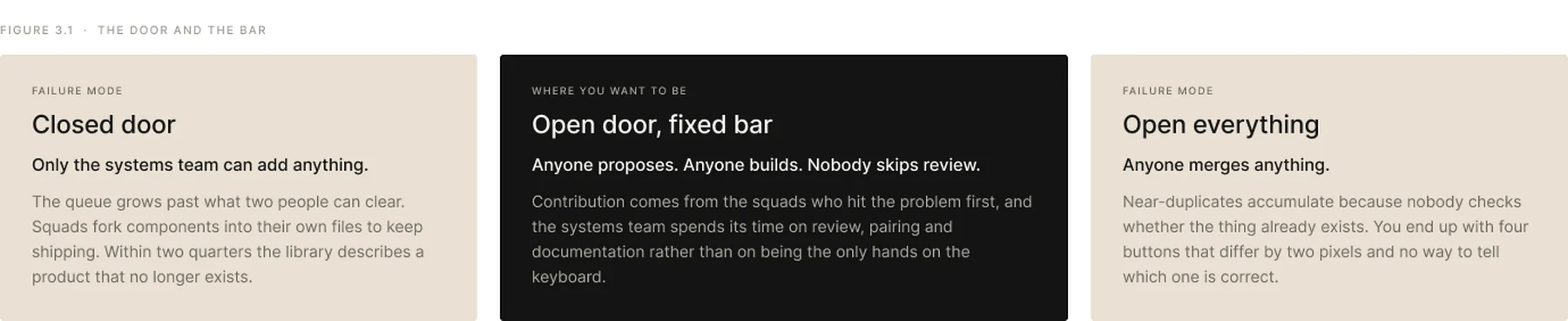
Closed Systems Die, Open Systems Rot
Both failures look like a governance problem and are actually the same problem: the door and the bar have been confused for each other. Open the door to everyone. Never move the bar.
Section 02
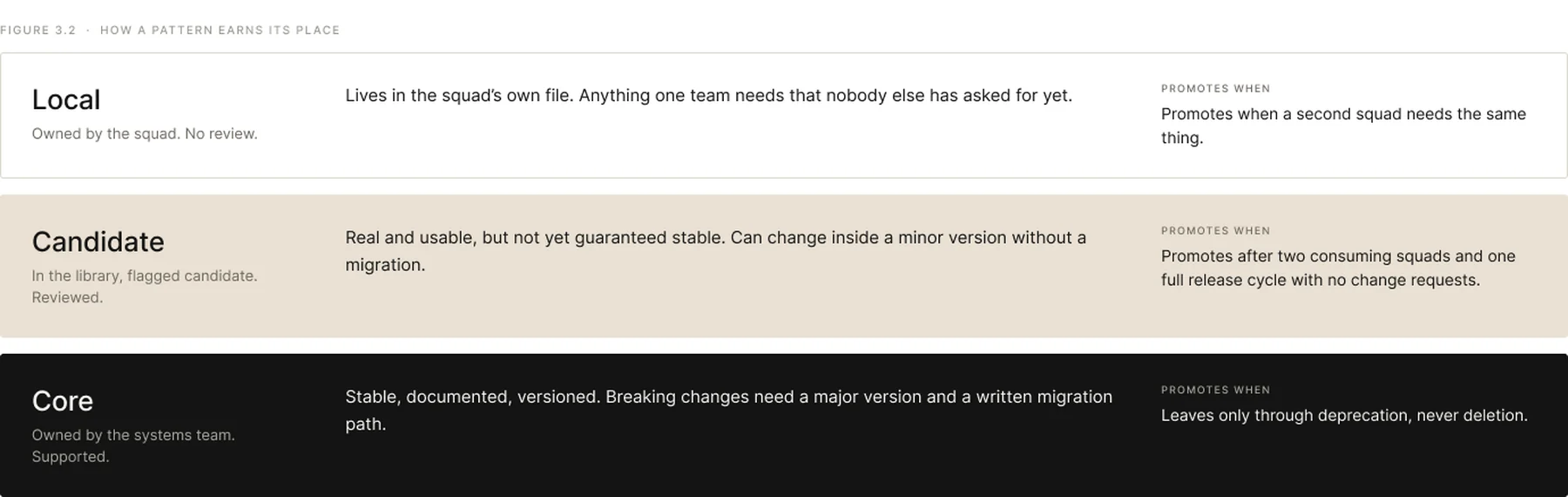
Local, Candidate, Core
Not everything belongs in the library, and the things that do should not arrive fully promoted. Three tiers let a pattern prove itself in production before the whole org takes a dependency on it.
Section 03
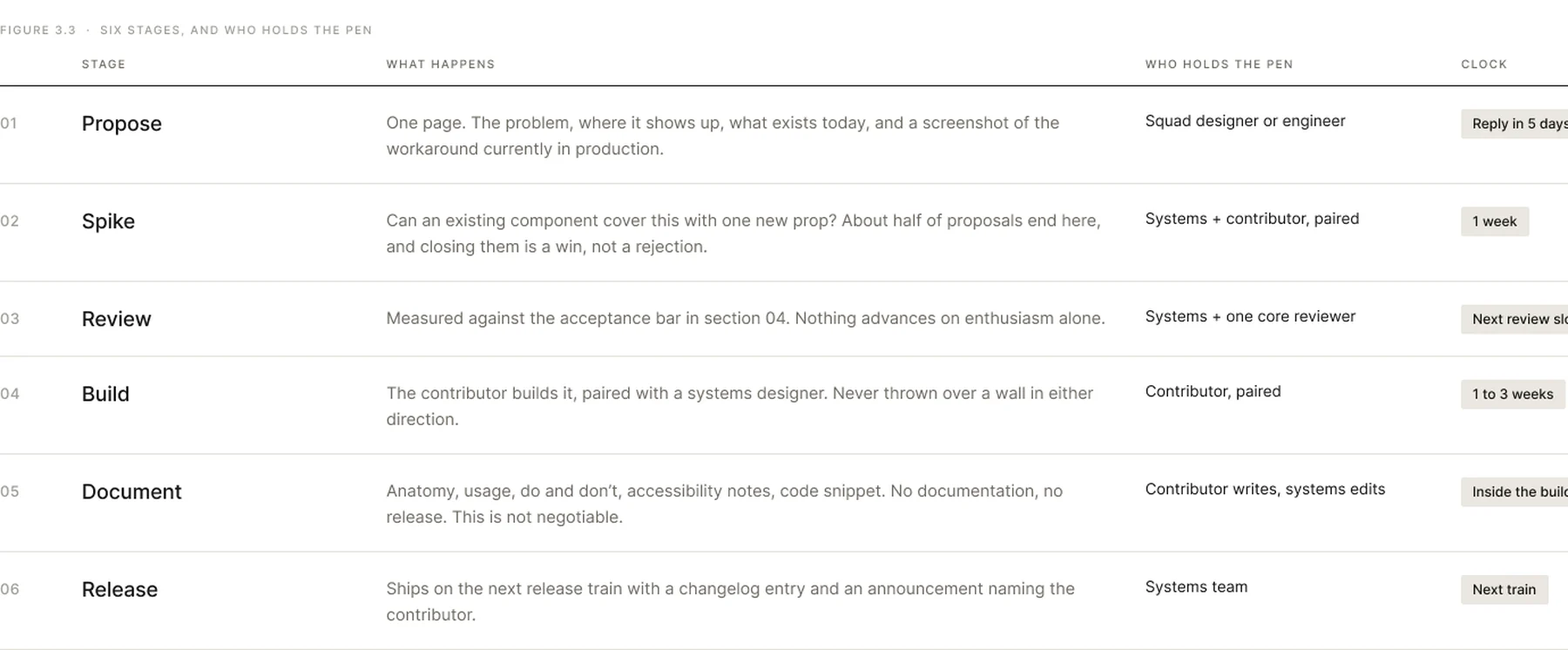
The Contribution Path
Six stages, and the contributor is in the room for all of them. The most important one is the spike, because roughly half of all proposals end there when it turns out the thing already exists. That is the process working, not failing.
Section 04
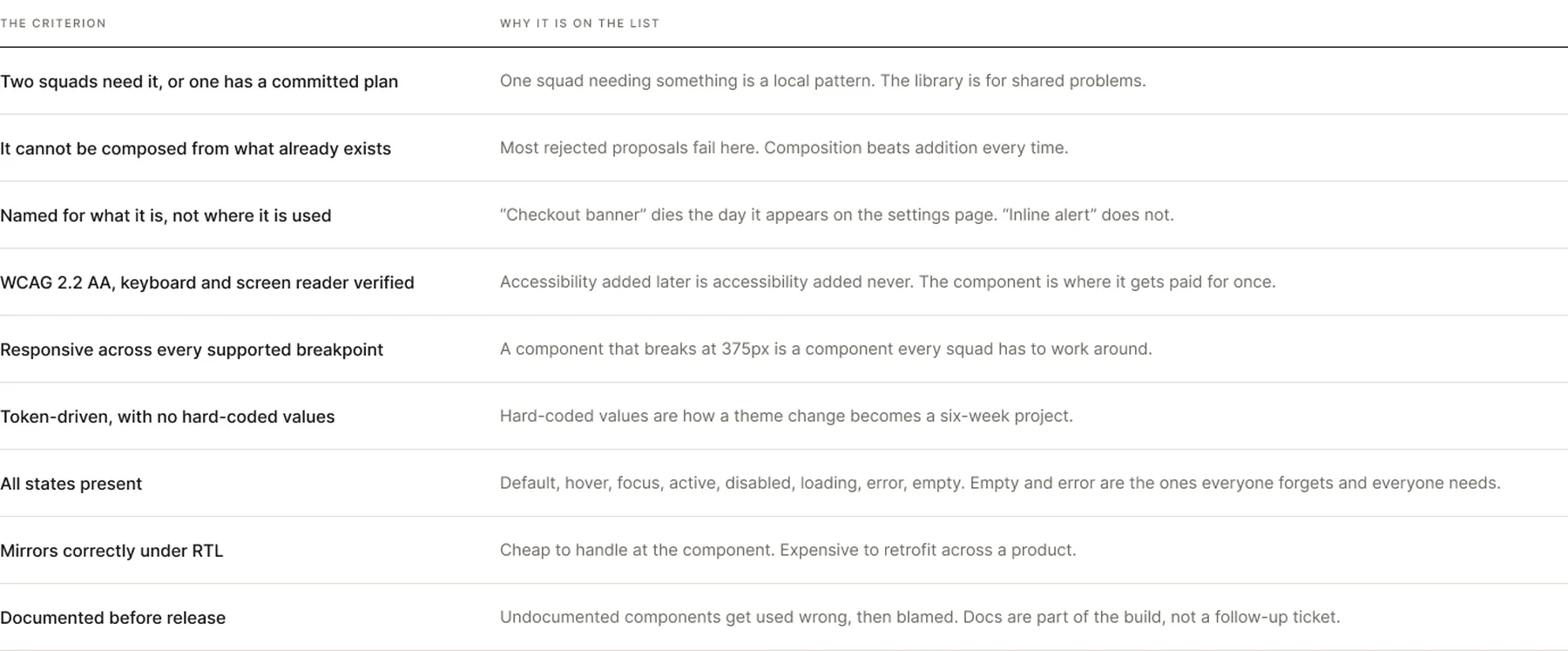
The Acceptance Bar
Nine criteria. All of them, every time, regardless of who is asking or how urgent the sprint is. The bar is the only thing standing between a design system and a folder of components.
Section 05
Versioning & Deprecation
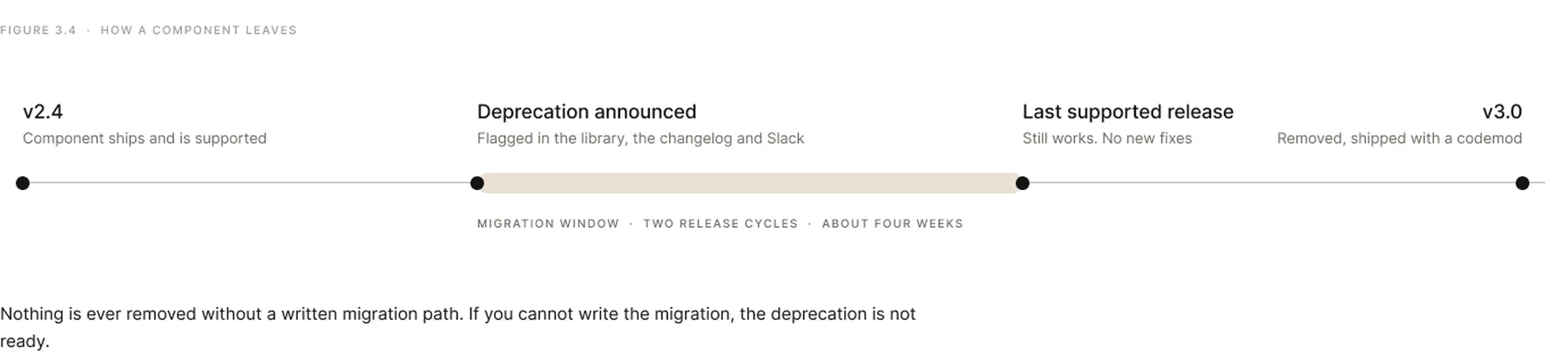
Semver, honestly applied. Major means something broke. Minor means something was added. Patch means something was fixed. The version number is a promise to every squad downstream, and breaking it once costs more trust than shipping late ever does.
Section 06
System Health
Adoption is the number executives ask for. Contribution rate is the number that tells you whether the system will still be alive in two years.
